


The real Betty Lou was born in a rough cabin in Georgeville, Mississippi on March 11, 1913. Betty Lou's birth mother, my grandmother, was the then thirty-one year old Nellie Lomax (1882-1933). I was to learn that family tradition describes her as "mixed" rather than "black," a term meant to indicate a person was considered to some extent 'white' as well as 'black'. Her mother, Florence Glover (1868-1958), who is also described as "mixed," gave birth to Nellie after she was raped by an unknown white male at the age of fourteen.1 The surname "Lomax" was possibly invented by the family to make it seem there had been a legitimate father.2 Family sources have told me that young black or 'mixed' girls/women alone at home, at work in the fields or in white peoples' houses, were fair game for white men in rural Mississippi at the time.

in Georgeville, MS
The mother I knew was uncomfortable talking about her parents, especially. Rare though they were, there were occasions on which she could be induced to make some attempt to appease my sustained curiosity about her ancestry. The narrative she eventually came up with sounds like something inspired by Gone with the Wind. And, now when I think about it, that may have been the case. According to that narrative she was born into the wealthy Harrington family on the old Harrington plantation in rural Mississippi, adjoining the extinct settlement of Georgeville. She once recalled how they had used barges to take the plantation's horses down the Mississippi river to the Gulf of Mexico, where they would be galloped in the surf to toughen their hooves. Her father, a true Southern gentleman named Hezekiah ('Ki') Harrington (1859-1923) was born just before the Civil War and the owner and 'boss' of the plantation.3 There was a photo of him in our house, looking sternly strong while chewing on a big cigar and wearing the appropriate fedora for a white gentleman of the South. She identified her mother as Nellie Harrington, full stop. No further information about my grandmother was made available and no photo of her appeared until I was in high school. And then it was printed on a tiny glass plate that obstructed the projection of any personal identity.
(1899-1900)
To continue my mother's narrative, Betty Lou and her three brothers enjoyed life on their plantation until the day Ki Harrington dropped dead of a stroke. Nellie tried to maintain control of the situation, but then suddenly and tragically also died – her demise the consequence of a subsequent jealous suitor according to the version my memory favors. At that point my mother was four years old. For whatever reason (my mother may have said the estate was contested) the four children – bereft of suitable relations – ended up as wards of the state and were sent to a Mississippi State orphanage.
To complete my mother's narrative: fortuitously there had been some Indians/Native Americans living on the plantation, with my grandfather's permission of course. In fact he had paid the school fees for several daughters of the Indian chief, and they consequently felt indebted to Ki and Nellie Harrington. One of those daughters was by then living in Waterloo, Iowa where she had married a 'railroad man'. This woman, who became known to me as "Tee,"4 arranged to become my four-year old mother's legal guardian and for her to be discharged from the orphanage. A free pass for the railroad – courtesy of 'railroad man' – brought Betty Lou to her new home in Waterloo. Her three brothers were not so fortunate. They remained as wards of the State of Mississippi until each reached legal age. But Tee remembered their birthdays and Christmases with cards, and sent them railroad passes so that as each reached legal age they were able to proceed to Waterloo for a kind of family reunion.
Florence Glover, Georgeville, MS
brother Bob 'Cowan' 13
Did I believe all of this? To appreciate my situation you have to understand whom my mother had become at the point in time when she told me this story. It was circa 1951, when I was ten and she was thirty-eight. By then Betty Lou Harrington had become Betty Bennett and was a nationally featured artist – to me a star – on NBC radio in Chicago. Texaco was the sponsor and I grew to love the noise of that fire engine's siren. Sometimes she took me to the studio with her and I would get to eat my fill of the sponsor's Sealtest ice-cream while privileged to witness a live studio TV broadcast of Kukla, Fran, and Ollie. And if absolutely no one else was available as caretaker while she was rehearsing, I was entrusted to Schmitty, the masterful bartender of Henrici's restaurant on the ground floor of the Merchandise Mart. So to answer the question, yes, I did believe her story. To me she was such a striking personality that she deserved a narrative that was somewhat beyond belief. For something I had come to appreciate early on about my mother and other beautiful and talented women she performed with was that they were also very smart. Beautiful women are sometimes stereotyped as intellectually disappointing because they choose to rely more on their good looks than their brains. Or, to reformulate the generalization so that it is applicable to my mother's situation, beautiful women are sometimes underestimated because they are thought to rely upon their good looks rather than their brains. While perched on the couch in the ladies' dressing room (they never went below full slips) reading my comic books, I could not help but overhear conversations that inspired a growing appreciation of intelligence, good sense, and decency that made me feel secure and at home in their company.
So the story was that Betty Lou grew up in Waterloo, Iowa as the ward of an Indian maiden, Tee, married to the low profile "railroad man". But now the Indian maiden morphed into a professional music teacher, so that while Betty Lou was in grammar school, high school, and one year of college, she was also receiving a comprehensive musical education at home. More importantly, she proved to have real musical talent and became a minor musical star in Waterloo. Things reached a point where Tee counseled her to go to the big city – in this case Chicago – and audition, audition, audition.

sister Fannie in Georgeville, MS
******************************
Since the relatively recent time when I became directly involved with discovering the truth about my mother's history, I am not satisfied with the way I've been able to flesh out the circumstances of my great grandmother, Florence Glover.5 Affectionately known as "Ma," Glover was and remained her maiden name. I'm told she could neither read nor write, and had a low tolerance for shoes. Apart from farming, she worked as a cleaning lady in white peoples' homes. She had a brother, Lafayette (the "La" eventually was dropped and it was then pronounced "Fate") Glover (1869-1945) who evidently made a pretty good living in Georgeville as a bootlegger because he built Florence a pretty nice house. Florence's house was built on Glover land, but the family could not afford a well. Water came from neighbors. The never-married Florence lived there with all four of her 'mixed' children – the three daughters (my grandmother Nellie Lomax, 1882-1933; Lizzie Sanders, the one also known as Tee, 1890-1985; and Fannie Sanders, 1898-1968) and the one son (Murphy Sanders, 1882-1946) she bore for the white men who had been part of her life.6
Apart from a forlorn segregated cemetery and adjoining Methodist church, the settlement of Georgeville, Mississippi no longer exists. I have been unable to locate any substantive history of the place in print or online.7 There is relevant information about Holmes County, where Georgeville was located. Going back to the period just before the Civil War, in the US Census for 1860 the county had a population of 5,806 whites and 11,975 slaves. In the 1870 Census, five years after the war, the white population was recorded as 6,145 and the "colored" as 13,225.8 Around the time my mother was born, in 1910, there were 7,802 "White" residents and 25,024 "Black" residents.9 This portion of the rural Mississippi heartland was and still is essentially agricultural. The freeing of slaves and the setbacks for people of color resulting from the end of Reconstruction resulted in the transition to sharecropping, an economic compromise whereby "a tenant farmer especially in the southern United States is provided with credit for seed, tools, living quarters, and food, and then works the land and receives an agreed 'share' of the value of the crop minus charges [for seed, tools, living quarters, and food]."10
My great great grandfather, also named Hezekiah Herrington11 (1790-1853), moved to Mississippi from South Carolina in the early 19th Century. The Harringtons/Herringtons soon became a prosperous and important family in Holmes County. Hezekiah's 1853 probated will12 allocates seven slaves by name (Jackson, Mariah, Patience, Erasmus, Delsey, Fanny, and Norris) [check will to see who inherited]. In the 1850 Slave Schedule he is on record as the owner of sixty slaves (33 male, 27 female). His three eldest sons, Kennedy (1816-1885; my great uncle), Ivy (1824- ?; another great uncle), and Fletcher (1826-1903; my great grandfather) are also on record in the Schedule as owning nineteen slaves (6 male, 13 female), eight slaves (3 male, 5 female), and five slaves (4 male, 1 female) respectively (Wiltshire 1993, 121). Ten years later, in 1860, Hezekiah had passed away but his sons' slave holdings had increased significantly: Kennedy 51, Ivy 46, Fletcher 36, and William 33 (Blake 4).
That forlorn segregated Georgeville cemetery and that of another nearby extinct town, Richland, contain the remains of all of the Harringtons mentioned here. Of Hezekiah's ten offspring, Kennedy apparently inherited the running of the family plantation up until his death in 1885. By my calculation, in 1885 eight of the original Hezekiah's children may still have been alive. Discounting the two daughters who married and probably left to join their husbands and brother Ivy who was busy with his medical practice, the remaining five and their families would have constituted a significant household. But the Harrington farm was big. Since the family was on record pre-Civil War as owning 160+ slaves, the plantation would have comfortably accommodated a household of this size. After Kennedy's death in 1885, third senior son Fletcher, my great grandfather, took over.13 Fletcher had served as an officer in the 5th Mississippi Cavalry during the Civil War.
Fletcher Harrington passed away in 1903 and at that point my grandfather, Ki Harrington, took over. My grandmother, Nellie Lomax, was entitled to be anything but the mistress of the Harrington farm.14 The category "mixed" may have provided some comfort for people of color, but in the State of Mississippi and the white society of Georgeville they were indisputably still black. In any case, up until 1967 in Mississippi it was against the law for the races to intermarry.15 Nellie Lomax was twenty-five years old when Ki Harrington fathered her first child. He was forty-eight. They would have three more children between them over the next nine years. One was my mother, Betty Lou ('Sis'), born in 1913. Her three brothers were Robert ('Cowan') Harrington (1907-2005), John P. ('Pac') Harrington (1909-1991) and Paul Murphy ('Tang', 'Fannie') Harrington (1916-2007).
Florence ('Ma') Glover had encouraged her three daughters to think 'white' when it came to partners of the other sex, and grandmother Nellie evidently followed her advice. In a state such as Mississippi and a community such as Georgeville, racial segregation was an absolute. As a woman of color Nellie could never have wed Ki Harrington, and she remained Nellie Lomax for the rest of her life.16 As a woman of color she could not cohabit with Ki at the Harrington farm. He arranged for the building of what I have described as the rough cabin for her and the four children on the Glover family's land in 'black' Georgeville, not far from the house Fayette had built for Ma Florence. Ki Harrington is remembered for riding up on his big white horse to 'visit' with Nellie in the cabin. For public consumption Nellie was 'employed' as a cleaning woman (serious irony there) in the Harrington family mansion, which accorded her visiting rights on a regular basis.
The overall impression I get of Georgeville in the early years of the Twentieth Century is that it was a racially 'mixed', relatively prosperous place. Some people of color owned their own farms – not nearly as grand as that of grandfather Ki Harrington's – but big enough so that they had livestock and were economically self-sufficient. Murphy ('Murph') Sanders managed and worked the family farm. His three somewhat half-sisters, Nellie ('Nel'), Lizzie ('Tee' also known as 'Lade'), and Fannie ('Dood' and 'Bay') were phenotypically light enough often to 'pass' for white. The photos of the three sisters together, adorned with the feather boas and elegant chapeaus provided by a photo studio, suggest that they must have been something special. Too special for Georgeville, evidently, because each would find a reason to leave Mississippi and head north.
The person primarily responsible for my mother's upbringing, who became known to me as Tee, was Lizzie Sanders, my grandmother Nellie Lomax's half-sister. Lizzie or 'Tee' recognized early on that Georgeville, Mississippi was a dead end for a black woman with ambition. Nevertheless, while still resident in Georgeville, Tee succeeded in qualifying as a professional educator by the time she was twenty years old. Tee would eventually become the one family members turned to when help was needed. Tee would be responsible for my mother's musical training, and then the originator and enforcer of the family pact to keep her racial identity a secret. For all of these reasons the story of this remarkable woman deserves to be told.
Family tradition says that at an early age Lizzie Sanders (Tee) was run over by a wagon, an accident that would make her incapable of bearing children. (This might explain why she would later be so welcoming and effective as Betty Lou's 'guardian'.) In any case at age twenty in 1909 Lizzie Sanders married Mr. John W. Whitehead, another Georgeville resident. John Whitehead was the principal teacher in the local segregated public school, and Lizzie first came to know him as a student in his classes.
Since there could be no offspring from their union, Lizzie sensibly set about acquiring the skills from her husband to become a teacher in her own right. Even so the marriage was to fail after a few years because of a domestic issue. She had expected her husband to build them a house of their own in Georgeville. Florence had her house and Nellie and Ki Harrington's children were in their cabin. But Mr. and Mrs. Whitehead were still living with his mother in the Whitehead family's house, an arrangement he was comfortable with and saw no reason to change. Lizzie decided that was a deal breaker and left him, abruptly and finally, and moved back in with her mother, Florence Glover.

By 1915, about four hundred African Americans lived and worked in Waterloo (Iowa Census, 1915). Many came from Holmes County, Mississippi, as strike breakers for the Illinois Central Railroad (Our Heritage: An Introduction to 150 Years of African American History in the Cedar Valley; http://www.uni.edu/chen/drupal-AA_voice/).
(family name for their Packard sedan), Waterloo, Iowa
The white population of Waterloo, including the railroad workers who were on strike, regarded the arrival of the southern blacks as an enemy invasion. Most restaurants and shops refused to serve them. Many of the new recruits had to sleep in empty boxcars. "When some one wanted to go to the store, they'd go out in groups. . . . If they got a guy by himself, you wouldn't see him no more after that ("Great Migration Railroad strike 100 years ago brought an influx of African-Americans to Waterloo," Waterloo Courier; http://wcfcourier.com/news/local/great-migration-railroad-strike-years-ago-brought-an-influx-of/article_3ac5cdf6-cef7-5d54-943a-742b04395ac6.html). There were threats; there were incidents; there were beatings; there were disappearances and worse.
Harvey Fullilove was one of those who saw the advertisements and came to Waterloo from Holmes County for a job with the railroad. In 1917, the year in which Lizzie (Tee) and Harvey arrived, things were still tense. But by then southern blacks had been there for seven years and the black population had increased from twenty-four to over four hundred. By the time of the 1920 census Lizzie and Harvey Fullilove are on record as residents of East Waterloo at 511 Dane Street, the neighborhood derisively christened by whites as "Smokey Row," barely a block away from the unreliable security of the tracks and workshops of the Illinois Central Railroad. But Lizzie and Harvey were there to stay. She had had some informal musical training while still in Georgeville (uncle Fayette was a serious guitar player). She also had her teaching credentials from Mississippi. And now thanks to her husband she had unlimited access to passes for the railroad. She began to commute to Chicago,18 on weekends accompanied by Harv, for professional music lessons. Eventually she would establish the Fullilove School of Music in a separate location on east 4th Street in what was now effectively segregated Waterloo, Iowa.19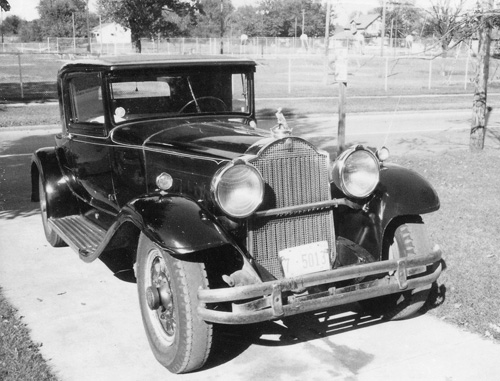

children Paul 'Pauli' and Paulette 'Sandy', Waterloo, Iowa
The ugly racial situation in Waterloo became national news. Segregated neighborhoods, stores and restaurants, schools and public transportation in what had been thought a comparatively northern city would endure for decades. The local press tried to put a positive spin on what was happening: "Moving to Waterloo was a new beginning. It allowed African-Americans to work consistently, avoid lynchings, avoid kidnapping or unemployment due to crop failure or floods (Waterloo Courier, iagenweb.org/blackhawk/people/bhcnancie/blackhis.htm)."
Let's recap what the major and minor players in the Betty Lou drama were doing in 1920. Florence Glover, "Ma," was still living in Georgeville with her brother, Fayette, in the house he built for her. Nearby, because it also was on the Glover property, Nellie Lomax and her four children were resident in the cabin Ki Harrington built for his 'black' mistress and their offspring: Betty Lou, Cowan, Jack, and Paul. Paul, their last child, is a bit sickly and occasions concern. Lizzie (Tee) and Harv have joined the "Great Migration" and are settled in Waterloo. In 1919/1920 Fannie, the youngest half-sister, someone I have so far neglected, has also married one Charles Spurgeon Anderson from and in Georgeville.20 They too joined the "Great Migration" and in 1920 ended up in St. Paul, Minnesota. When asked, late in life, Charles Spurgeon Anderson said he boarded the train in Mississippi with his mind already made up that he would settle wherever it stopped finally, and that turned out to be St. Paul. Fannie's presence there and Lizzie's presence in Waterloo would prove to be life savers for Nellie barely one year later. Meanwhile, on another side of Georgeville Ki Harrington, at age sixty-one his own version of the 'lion in winter', was still the principal resident of the Harrington family farm and mansion. In the US census for 192021 he listed himself as Head of Household and then, rather unusually, listed four "servants" as the members of his household: Red Thad (male, Black, 20 years old, laborer), Barger Lekapell (male, Black, 21 years old, laborer), Cassey Ross (male, Black, 16, laborer), and Bessie Dixon (female, Black, 30, private family cook).


The Glovers had a reputation locally in Georgeville as a family not to be messed with. Uncle Fayette was known to be a crack shot with his rifle, a reputation that on at least one occasion discouraged white men who found him disrespectful from exacting revenge. Ma Florence was known to carry a knife on her person that was for more than show, understandable given the way she had been violated at age fourteen. The question would be whether this attitude was being passed on to the next generation, the three half-sisters and half-brother Murph.
Ki Harrington at age sixty-one had never married white, unlike other gentlemen farmers of his generation. His reputation as a bon vivant, though somewhat muted, remained intact. Family tradition records that he took little interest in the four children he had sired with Nellie, perhaps primarily the consequences of the absence of contraception. Betty Lou and her siblings spent most days in the big house with Ma Florence and Uncle Fayette. Nellie was away working on the farm or in white people's houses to supplement the meager Glover family income. All of this was to change, radically and dramatically, one day in June 1921. Whether Nellie already had her suspicions is hard to say. Whether her actions were motivated more by love or pride or rage also is difficult to determine. But one moring, when she arrived at the Harrington mansion she found reason to engage Ki Harrington in his own bedroom. There she found him in bed with another much younger 'black' woman/girl. One wonders if it could have been the thirty year old Bessie Dixon he recorded as a member of his household on the 1920 census.
In accordance with Glover family tradition Nellie did carry a serious knife on her person, and she proceeded to use it on the interloper. The damage done must have been serious, because it was enough to cause Nellie to panic and flee Georgeville and the state of Mississippi that same day. What part Ki Harrington played in things at this point is not said. But since the sheriff would have to be involved, Nellie would have faced jail immediately. So she rushed back to Ma Florence and packed hastily for herself, Betty Lou and two of the three brothers. Little Paul was unwell at the time and had to be left behind with Florence. Somehow she managed to get herself and the children to the railway station in nearby Durant, or the more distant and discreet station in Lexington. A few days later, June 12, 1921 she sends a postcard to Florence from Chicago:
I am feeling all right. Not worried nor sick at all. My feet and legs are swollen a deal, don't hurt though. Don't fail to be nice to [illegible – need ultraviolet light to read] but he loves you. Take care of baby Tang [Paul's nickname].
The text of the card may indicate that Nellie as well did not come away from the encounter in Ki Harrington's bedroom unscathed. But since this was the formidable Glover family, Lizzie (Tee) and Fannie were also immediately available to help the distraught Nellie cope. Betty Lou, now eight years old, was entrusted to Lizzie and Harv in Waterloo, Iowa where she would be raised as their de facto daughter. Nellie and the two boys, Cowan and Jack, proceeded to St. Paul, Minnesota where they were welcomed and housed by Fannie and Charles Spurgeon Anderson.


music school from Waterloo, Iowa newspaper
and as head of music school, Waterloo, Iowa
******************************
The Betty Lou who had been told to go to Chicago and audition, audition, audition had commendable success. By my reckoning she would have arrived there at age 19, in 1932. Her Betty Bennett scrap album contains a Chicago newspaper clipping from 1932 that reads as follows:
One of WJJD's [the call letters of the radio station] favorite singers of the blues is BETTY HARRINGTON, tall beautiful 19-year-old girl who came from Iowa to make her name in radio. She is featured along with the other beautiful girls on BEN KANTER'S personally conducted "TEA PARTY," every afternoon at 2.30 p. m.
Betty has a low musical voice of rich timbre and expression that does a certain something to the male audience, judging by her fan mail which is all male! For the benefit of those gentlemen, here is a description of the young starlet: five feet seven in height, very dark eyes and hair, and a pleasing personality!

Betty Lou sings the blues (right)
Newcomer
Betty Bennett, "the girl with the deepest voice on the airways," recently celebrated her twentieth birthday [1933] by singing her first radio solo. It was with "Silken Strings,".22 heard at 8 o'clock Sunday evenings CDST [Central Daylight Savings Time] over NBC. This tall, talented girl is one of radio's newest finds. She joined the Bennett Sisters Trio in Orlando, Fla. last winter [1932] and the girls made their ether [radio] debut in January over NBC in Chicago. Betty's remarkable voice–she sings a low C–will continue to be heard with Charles Previn's23 orchestra. In addition to singing, she is an accomplished pianist, plays the guitar better than most, and is the arranger for the sister act.
My mother's scrapbook contains several photos of the Bennett Sisters. The transformation that has taken place in her appearance, when compared with that published in the first newspaper clipping referenced above, is dramatic. As was, apparently, the success of the trio, since they were soon signed on as "staff artists" by NBC in Chicago in order to be featured on the Silken Strings program. There are clippings indicating that the trio also performed at special shows sponsored by Studebaker automobiles and that they were flown to Orlando Florida for an appearance at an exclusive supper club.24 Her professional life appears to have become that of a performer who is being offered multiple opportunities and is doing her best to selectively take advantage of as many of them as possible. Here's a dialogue exchange with Helen Bennett from an audition with radio station WGN involving a dialect with which she was more than familiar:
Housewife Helen: WHY Mandy. . . did you forget? I told you never to use anything else but Old Dutch [a popular cleanser at the time].
Servant Betty: "OH Lawsy Mam', Ise didn't forgetted, Ah jus took the label off'n the can so Ah could send in fo' one of dem prizes. Sides I ain't agoin to work mah fingas to de bone when all I has to do is jes use a mite 'o Old Dutch and it do all the work for me in a jiffy.
dedicated to brother Paul but no date
The audition seems to have been a success, according to another undated [1933] clipping from a Chicago newspaper:
BENNETT SISTERS TO BE GUESTS ON HOUSE PARTY
The Bennett Sisters, rhythm trio, will take their place tomorrow as guest stars on the Friendly Neighbors House Party, musical variety show broadcast over W-G-N at 10 a.m. every day except Sunday.
Close natural harmony, unique arrangements, and a repertory extending from "hot" popular tunes and novelties to the semi-classical songs give their programs a variety not usually found in girls' trios. Each of the Bennetts is a soloist in her own right, and Betty accompanies the trio at the piano.
I'm not sure what sort of formal agreement was originally entered into when the Bennett Sisters came together in late 1932. With its two older and more professionally experienced members, being part of the trio must have offered a form of guidance and support for the nineteen year old Betty Harrington from Mississippi via Waterloo, Iowa. But Chicago theatrical agents, radio stations, and networks soon decided that her talents were too original and important to be confined to the trio.
Sultry Singer
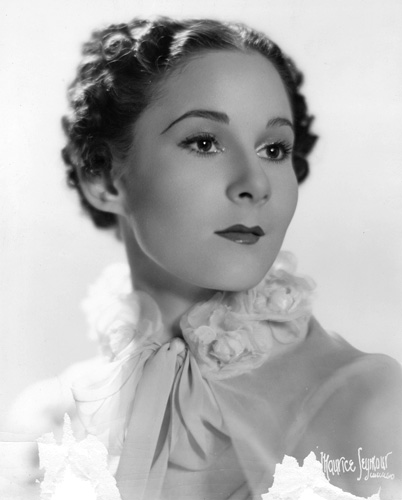
Betty Bennett
The sultry voice you hear on the Club Matinee programs each day at 3 p. m. over WTCN (NBC) belongs to Miss Bennett, a Mississippi girl who grew up in Iowa. She made her debut as part of a trio, but soon was singled out for her own spot on the air (Chicago Tribune, n.d.).
BETTY AND HER NEIGHBOR BOYS
Musical
PETER FOX BREWING COMPANY
Thurs., 9:15 p.m. ET
WBBM, Chicago
Here's a nice snappy 15-minute musical program. Betty Harrington [possibly avoiding the surname "Bennett" because of a potential conflict of interest] tickles the ivories and harmonizes with a trio tagged "The Neighbor Boys." All four have nice pipes and blend together smoothly. Solos by Miss Harrington and the trio break it up a bit and add spice to the program (Chicago Tribune, n.d.).
October 17, 1935
Dear Earl:
Have been waiting for some time for you to get in touch with me regarding the enclosed contract [relating to the creation of the Bennett Sisters]. But, here's the dope. My attorney seems to feel that this is not an equitable contract, however, before going into it any further I would have to learn more of the circumstances from Betty herself. . . . .
Please let me know if there is anything further I can do.
Best regards to you and Lucy.
Sincerely, BIGGIE
Attention focused on freeing my mother from the confines of whatever agreement she had entered into in January 1935 with the Bennett Sisters. This was resolved, finally, via a sealed legal Release dated May 13, 1937 (interestingly not signed by my mother), according to which she paid the other members of the trio $10025 to be free of all obligations to the Bennett Sisters trio. That Release, specifically, also allowed her to use the professional name "Betty Bennett."
My mother must have welcomed the Release because now she could focus on other potentially momentous opportunities that were knocking. Earl Lawrence's wife, Lucy, had written to her from New York City in April 1936:
I wasn't able to see Lou Irwin26 for you until today since he's been on the [West] coast taking care of some people for pictures [movies]. He was interested in the record and the pictures [still photos], wanted to know how tall you were, how thin or fat and when I told him you danced a bit27 he was pleased. . . . I know this Irwin man has done big things with Ethel Merman and he could do things for you too. . . . New York is definitely the place to be.
There are three letters in my mother's scrap book from Lou Irwin, International Theatrical Representative, and a Hollywood contract that she never signed. The first letter is dated April 30, 1936. It makes reference to his meeting with Lucy and urges my mother to drop everything and come to New York. "I feel confident if you were in New York I could place you and keep you busy."
The second letter accompanies the contract and both are dated May 11, 1936. Irwin asks Betty Bennett to send him more still photos of herself and says he is anxious to arrange for a screen test, either in New York City or Hollywood, California if she prefers. "You will notice the agreement I am sending you is with my California office as our ultimatum [sic.] at all times is to get our people set for pictures. . . . If by the time I decide to go to the coast you have not arranged to come to New York I will try my best and stop off in Chicago and see you."
The contract, for employment in the "motion picture industry," etc. is a complicated document that is best entrusted to the Appendix at the end of this story. What is pertinent here is that Betty Bennett did not sign it or return it or communicate further with Lou Irwin. The third Irving letter, dated June 1, 1936, therefore, marks the end of any further exchanges between them:
Wired you on May 28th from Chicago that I would like to have you call me at the Congress Hotel as I was there for the Twentieth Century-Fox Film Company Convention and had with me all of the officials of Twentieth Century, including Mr. Darryl Zanuck and Mr. Pincus.
Sorry that you failed to answer my wire, and appreciate you letting me know why you ignored doing this.
I doubt my mother let him 'know' anything, given all of the fables she was living at the time. She never mentioned any of these events to me and I first discovered all of this in the scrapbook after her death.28 But I think I can shed some light on why she behaved as she did. She had succeeded in becoming something of a success as a professional entertainer in the Chicago context. She had done so by 'passing' as white. Well meaning white colleagues and associates, like Earl Lawrence and his wife, thought her talents deserved more than what Chicago could offer. According to them she even had the potential to be a person of consequence in Hollywood and its motion pictures. How could my mother possibly refuse their ambitions for her and efforts on her behalf? How could she say, convincingly, that she did not want that kind of success?
But, if she did follow through by signing the contract and committing to Hollywood, that would involve providing detailed information about her family background and origins. The Chicago entertainment market was sufficiently small-scale so that did not happen. She felt sufficiently secure there to make reference to Waterloo and Mississippi in general terms. But in all of this she had to rely on white people's presumption that people who behaved 'white' and looked 'white' were in fact white. Anyone with an ounce of determination who went to Waterloo and visited the Fullilove School of Music would have come face-to-face with her segregated origins, and that would have been enough to terminate her entire career. What else could she do but remain passive about the Hollywood possibility and lose it by default? As a person of color operating in a white universe, she must have realized that she would have to limit her possibilities and successes in order to survive.
******************************
Before continuing the Betty Lou story there are other events that deserve mention. On April 21, 1923 her father and my grandfather, Ki Harrington, really did die of a stroke in Georgeville, Mississippi. So that at least is one detail of my mother's fictional recreation of her family history that was true. According to his Last Will and Testament, which is on file in the old Holmes County courthouse in Lexington, Ki Harrington left his estate to his "beloved sister, Ethel Smith, of Union, South Carolina." Ethel Smith was in fact Ethel Harrington Smith. It does seem to be the case that the Harrington's originally moved to Holmes County, Mississippi from Union County, South Carolina. As the testaments of both Ki and his brother state, Ethel was resident in Union City. In the US census of 1900 Ethel is listed as resident in Union City but identified herself, her mother, and her father – all as born in Mississippi. In the 1910 census the medical doctor who would become her husband, Manning Taylor Smith, also is listed as born in Mississippi. An interesting coincidence that the two of them were married in Durant, Mississippi (a few miles from Georgeville) in 1891!
In St. Paul, Minnesota Betty Lou's mother and my grandmother, Nellie Lomax, never risked returning to Mississippi for a visit even though Ki Harrington eventually provided some financial support for her and the children. She passed away in a hospital on August 15, 1933 from unsuccessfully diagnosed internal bleeding at the age of fifty-one. To support herself and her sons, Nellie had been a janitor in that hospital and various office buildings. She was eventually buried in Georgeville, but in an anonymous grave ("Mother," undated) as part of the enduring campaign to conceal Betty Lou's true identity.
I plan on creating a website as a platform for encountering Betty Bennett, the vocalist and keyboard artist. When I learned the truth about her life story, I thought that story sufficiently remarkable so that it deserved telling, at least up to a point, as an introduction to the website. I think that point has almost been reached. In these concluding paragraphs I have only to recount her work with the elusive guitarist, "Sunny Joe" Wolverton. It is their performances together that will be featured on the website.
Who was "Sunny Joe"? Information available is very basic and sometimes wrong. He was born Ralph Edwin Wolverton on July 8, 1906 in Carbon, Indiana. Somehow he came to specialize in playing the guitar and banjo. Early on he is said to have worked in vaudeville in an act billed as "Banjo Land." Thereafter he supposedly performed with Gene Autry, the cowboy singer and actor, and then played in a touring outfit known as Rube Tronson's Cowboy Band. It was while performing with this band in 1930 that he became a mentor to Les Paul, someone who would become famous for inventing and introducing the electric guitar.
Wolverton is said to be a noteworthy historical figure because of the 'influence' he had on Paul. What no one seems to know is precisely what that influence involved. No one goes so far as to suggest that it was Sunny Joe who invented the electric guitar. What one does find is ambiguous phrasing such as the following: "Sunny Joe Wolverton, an older guitarist who'd taken him [Paul] under his wing and shown him a bagful of tricks (http://articles.latimes.com/1993-06-13/books/bk-2512_1_les-paul)." Or: "Wolverton was doing something Paul had never seen a guitarist doing before: playing above the third fret (Eugene Chadbourne, All Music Guide).
As Paul's mentor, Wolverton was the one to christen him with the stage name 'Rhubarb Red', a moniker that would follow him to Chicago in 1934. There, Paul became a bona fide radio star, known as . . . hillbilly picker Rhubarb Red (http://www.jambase.com/Articles/19263/Guitar-Legend-Les-Paul-RIP)."
I have the impression that there was a sense of genuine camaraderie shared by community of professional musicians in Chicago during the early 1930's. The same performer could be involved with any number of different venues, groups, even radio stations. Les Paul put it this way:
Chicago was a fireball in the early 1930s. All the great music was in Chicago. They either came to town or they were already there. You never took a streetcar or bus to get to clubs. They were too close. You'd just take your guitar in your hand and walk from one club to another. Every theater in the neighborhood had vaudeville. We lived jamming (http://jasobrecht.com/les-paul-guitarist-inventor-inspiration/).
Beginning from 1934 Sunny Joe and Rhubarb Red, based in Chicago, were performing on a variety of radio shows. Betty Bennett, both as one of the Bennett Sisters and as a solo vocalist, was performing on some of the same shows. For example, in 1935 Betty Bennett and Joe Wolverton were both performers on Don McNeil's Breakfast Club, which originated from the NBC studios in Chicago's Merchandise Mart. Betty Bennett, Sunny Joe Wolverton, and Les Paul as Rhubarb Red were all performing on the weekly very popular National Barn Dance program broadcast on WLS radio.


On internet web sites specializing on those years, apart from one obvious miscarriage of justice, I can find no reference to possible working relationships between all three of these artists. The miscarriage reads as follows:
Wolverton split with Paul because "Sunny Joe" wanted to pursue a country and acoustic career. That career consisted largely of recording with a singer named "Polly O'Neal," who also used the name "Polly Possum.quot; He then went to California and backed up a country singer named Betty Bennett (http://answers.google.com/answers/thrreadview?id=179044).
This sequence of events doesn't make sense. Sunny Joe's recordings with Polly Possum, now available via Youtube, date from the 1950's. Betty Bennett never relocated to California. Equally certainly she never billed herself as a 'country' singer, but she did bill herself as a blues singer. It also doesn't seem fair to 'type' Wolverton as a country guitarist. Over the course of his career, as evidenced by the time he and Betty Bennett were a duo, he played blues and pop. Here are several blurbs from the media pages at the time:
Betty Bennett is the young blues singer heard with Joe Wolverton, guitarist, in novelty numbers on NBC program [sic.], and also on the "Club Matinee" show at 3 every afternoon over WENR (Chicago Tribune, n.d., 1937).
BENNETT AND WOLVERTON
Their own special guitar and vocal arrangements of "The Birth of the Blues" and "Harbor Lights" will open the program of Betty Bennett and Joe Wolverton, Friday, September 3, at 9:15 a.m. CDST over the NBC-Red network. Wolverton will also do a guitar solo, "Sophisticated Swing." Vocal renditions of "Moonlight and Shadows" and the novelty, "Shame On Me," will close the program (NBC Program Notes, 1937).
Whether Wolverton or Paul initiated the breakup in 1938 is hard to say. Paul's later collaborations with biographers documenting the period seem to favor Wolverton as the instigator (Bob Jacobson, Les Paul: Guitar Wizard). What is clear is that the two men remained friends.
Betty Lou had learned that that the secret of her racial identify could be kept relatively secure in Chicago as long as she was willing to reconcile herself to being a lesser 'star'. The Bennett and Wolverton duo would last for a little more than a year. Their contract with the NBC Artists Service is dated May 13, 1937, and indicates they were expected to perform on a variety of NBC programs. The letter terminating the agreement is dated June 25, 1938.
The nature of Bennett's and Wolverton's personal relationship is an unknown. Given their ongoing popularity and proven success it is difficult to understand what or who instigated the split. Possibly Sunny Joe was another who was seduced by the possibility of fame and fortune in Hollywood, California. That is where he eventually went and he would later perform there on NBC radio with a group called The Local Yokels as well as with Spike Jones' City Slickers novelty band in the 1940's. And he did at least 'appear' in 'pictures'. In a YouTube video which no one else seems to have noticed, of Spike Jones and His City Slickers performing the song Chloe in the 1945 film "Bring on the Girls" (starring Eddie Bracken and Veronica Lake), it is clearly Sunny Joe who plays, in succession and much of the time on camera, the electric pedal guitar, the acoustic guitar, and the banjo–all in the course of a single song!


Tea's Waterloo Residence with nephew Pauli and cousin Reginald Anderson, 1967
Betty Lou 'Sis', Bob'Cowan', Waterloo, 1967



1937
